

When someone loses a large number of kilograms, excess skin often remains as an unwanted reminder. Many then face the question: what to do with it? For many, the solution is cosmetic surgery.
Not only people who have lost a significant amount of weight experience joy with their new body. When someone loses a large number of kilograms, excess skin often remains as an unwanted reminder. Many then face the question: what to do with it? For many, the solution is cosmetic surgery.
"When I lost around fifty kilograms, the excess skin became a burden all over my body," recalls 51-year-old Martina. At 165 cm tall, she reached a weight of 111 kg. Bariatric surgery—specifically gastric plication—along with a lifestyle change helped her achieve her weight loss. "The biggest problem for me was the large excess skin on my abdomen," she explains, which led her to consult a doctor at OB Care Clinic in Prague.
Dr. Martin Skála recommended an abdominoplasty (tummy tuck) using the FDL (fleur-de-lis) method. "This technique is particularly suitable for patients after major weight reduction. It allows better contouring of the torso, including the sides, which is not achievable with a standard tummy tuck," explains Dr. Skála. The resulting scar has an inverted T shape.
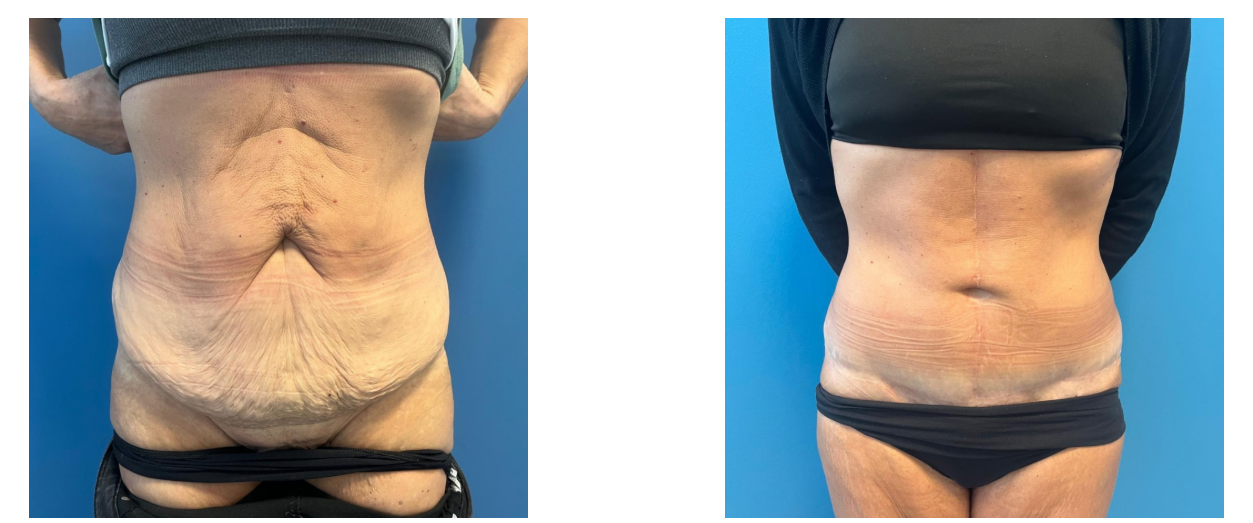
Ideal After Multiple Pregnancies or Major Weight Loss
Abdominoplasty, also called a tummy tuck, is a surgical procedure performed under general anesthesia and typically lasts two to three hours. Patients will have a scar, which fades over time but remains visible. The long-term results, however, make the procedure worthwhile. The picture above is 2 years from the original surgery.
Abdominoplasty is suitable for women after multiple pregnancies and men who experience diastasis of the abdominal muscles that cannot be corrected through diet or exercise, or for patients after significant weight loss. "The choice of abdominoplasty method depends on the patient’s history of obesity and the extent of weight loss," says Dr. Skála.
There are five main techniques for abdominoplasty—classic, mini, FDL, FAB, and reverse abdominoplasty. Dr. Skála is one of the few surgeons in the Czech Republic performing the reverse method. "It’s not a common procedure, which may explain why other surgeons rarely perform it," he adds. This technique focuses on removing excess skin from the upper abdomen, where a standard tummy tuck is less effective.
"In reverse abdominoplasty, the incision is made along the inframammary fold. The excess skin is pulled upward and fixed near the chest," explains Dr. Skála. "The scar remains under the breasts, which is especially advantageous for women who have previously undergone breast surgery, such as a breast uplift or breast reduction."
Recovery and Postoperative Care
Healing from abdominoplasty is similar to other surgical procedures. "Skin healing takes approximately 14 days, and overall recovery usually takes around five weeks," says Dr. Skála.
Gentle and Controlled Anesthesia
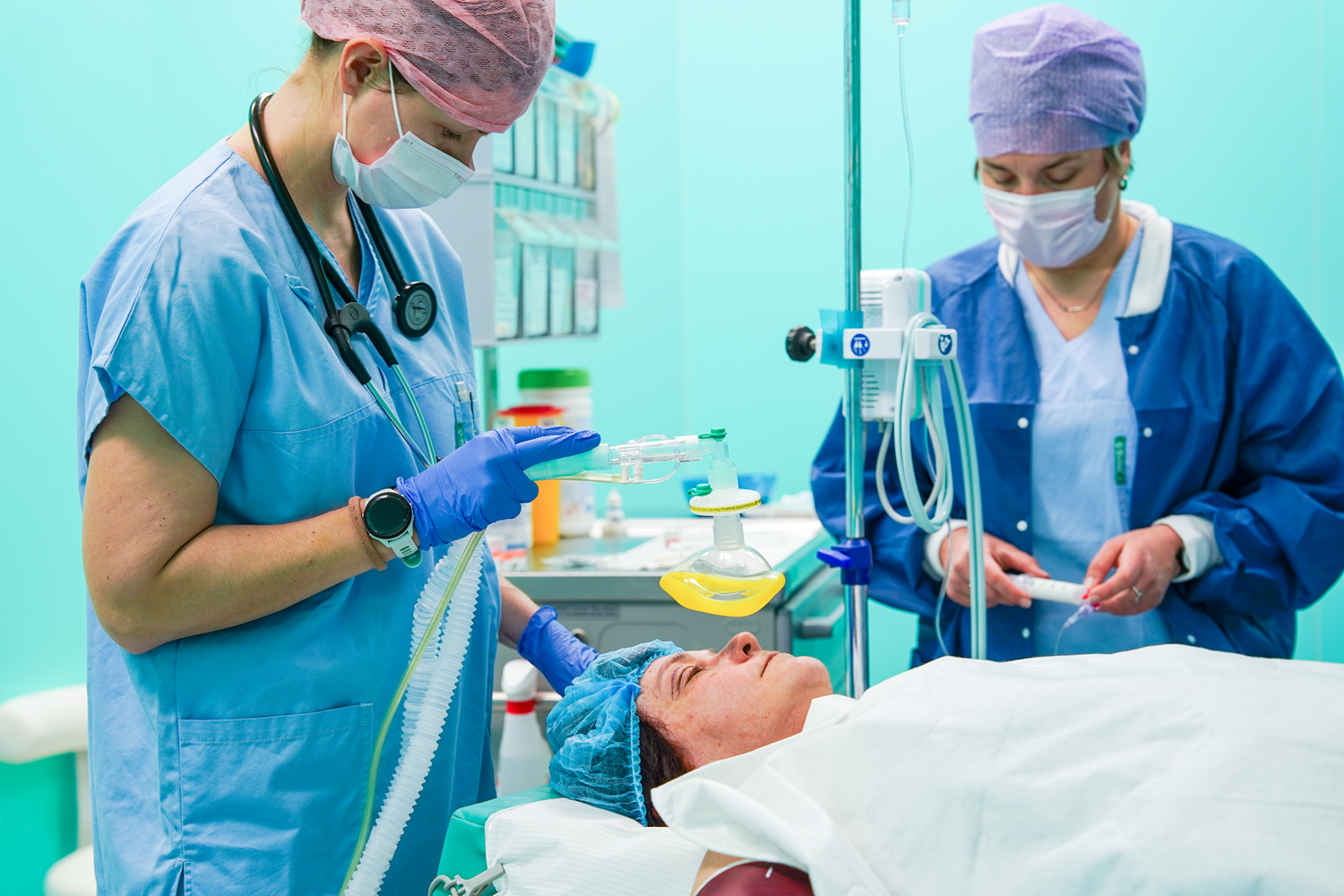
As the surgery is performed under general anesthesia, patients consult with an anesthesiologist prior to the procedure. OB Care Clinic uses modern total intravenous anesthesia (TIVA) to ensure the gentlest possible induction. This technique uses a combination of drugs administered exclusively intravenously, tailored to the patient’s needs. Patient comfort is enhanced by a system of warming blankets that circulate warm air during the procedure.
"This anesthesia method is well-controlled and significantly reduces nausea and other side effects," explains Dr. Skála.
"I had no complications after surgery. I followed the standard scar care right after my check-up. It took some time to get used to certain limitations, but after 21 days I was fully active," recalls Martina. "I also had to adjust to my new body, but I am absolutely thrilled with the results. It has completely changed my life. My health issues are gone, and I no longer feel embarrassed about my body. I have a better figure now than I did in my youth," she concludes.